Ethical AI requires board-level governance, measurable risk controls, and documented evidence for any claim about an AI system. Three priorities come first: assign oversight at the board or executive level, map risk using the NIST AI RMF, and keep verifiable proof behind every performance claim you make. We walk through how to do all three below, and where an outside AI partner can help.
TL;DR:
- Leaders must govern AI risk by establishing clear oversight, documenting use cases, and setting measurable performance and safety standards.
- Bias mitigation requires diverse data collection, pre-deployment audits, cross-functional reviews, and periodic re-audits to address systemic, statistical, and human biases.
- Ongoing AI monitoring involves defined metrics, anomaly detection, incident response plans, and a formal decommissioning process to manage live systems effectively.
- Regulatory actions, including FTC and EEOC enforcement, emphasize transparency, legal validation, and proactive harm prevention in AI deployment.
- Implementing external support and escalation procedures helps organizations handle ethical concerns swiftly, preserving trust and avoiding legal or reputational damage.
Table of Contents
- Core ethical issues business leaders must understand
- Governance mapped to the NIST AI RMF: what boards and executives must own
- Practical implementation roadmap: step-by-step from pilot to enterprise adoption
- Bias identification and mitigation in practice
- Monitoring, incident response, and lifecycle controls for deployed AI
- Regulatory and enforcement concerns that should shape policy
- How tekRESCUE AI supports ethical, secure AI adoption
- Conflict resolution and escalation procedures for ethical AI concerns
- Author perspective: ethics as a strategic advantage
- Schedule an AI Profit and Growth Assessment
- FAQ
- Sources
Core ethical issues business leaders must understand
AI brings real upside, but it also opens a few specific risks that can turn into legal and financial problems fast. Here’s what we think every leader needs to understand before approving a deployment:
- Bias: An AI system trained on skewed data can produce discriminatory outcomes in hiring, lending, or pricing, which can trigger litigation and lost customers.
- Privacy and data protection: Training data often includes personal information, so data minimization and clear retention limits matter from day one.
- Transparency and explainability: Customers and regulators increasingly expect a plain-language explanation of how a system reached a decision, not just a result.
- Security and robustness: Weak model integrity opens the door to data leakage and prompt injection attacks that can expose sensitive information or manipulate outputs.
- Workforce impact: Automation changes roles, and employees need honest communication plus retraining paths, not just a layoff notice.
Each of these issues touches governance, compliance, and your bottom line at the same time. A biased hiring algorithm isn’t just a fairness problem, it’s a legal exposure. A chatbot that leaks customer data isn’t just an IT incident, it’s a trust problem that can take years to repair. Treating these as one connected risk picture, rather than five separate checklists, is what separates a mature AI program from a reactive one.
Governance mapped to the NIST AI RMF: what boards and executives must own
The NIST AI RMF organizes AI risk management into four functions, and each one maps to a specific set of leadership decisions, not just a technical task list.
- Govern: The board and executive team set the organization’s risk tolerance, assign decision rights, and build a cross-functional structure (legal, IT, HR, operations) that reviews AI use before it ships.
- Map: Every use case gets documented before approval, including its intended purpose, who it affects, and what could go wrong if it fails.
- Measure: Leaders set the metrics, testing routines, and evidence thresholds a system must clear before anyone can make a public claim about what it does.
- Manage: Ongoing monitoring, incident response plans, decommissioning procedures, and third-party vendor risk controls all need an accountable owner, not a shared responsibility that nobody actually owns.
NIST developed this framework in 2023 as a voluntary, flexible resource, which means it doesn’t hand you a compliance checklist so much as a shared vocabulary for talking about AI risk across departments that otherwise speak different languages. A board member doesn’t need to understand model architecture to ask “what’s our risk tolerance for this use case, and who signed off on it?” That question alone, asked consistently, does more for governance than most technical controls.
Practical implementation roadmap: step-by-step from pilot to enterprise adoption
Turning governance principles into daily practice takes a sequence, not a single policy document. Here’s a roadmap we’d suggest running over the first three to nine months:
- Prioritize use cases by risk and value. Rank candidate AI projects by potential business impact against potential harm, and start with a time-boxed pilot on the highest-value, lowest-risk option.
- Write the policy and build the risk register. Document what’s allowed, what requires approval, and who owns each category of risk before any system touches a customer.
- Require testing and evaluation before deployment. No system goes live without documented testing, validation, and verification, often called TEVV, against the metrics your team set in the Measure stage.
- Define human-in-the-loop controls. Decide which decisions a person must review before they take effect, especially in hiring, lending, or anything customer-facing.
- Set up data governance. Track data lineage and access controls so you know where training data came from and who can touch it.
- Build a vendor and third-party checklist. Any AI tool you buy rather than build needs the same scrutiny as one you build in-house.
- Assign ownership. Name an AI steward, a risk owner, and make sure your CISO or IT lead is in the room for every AI decision, not brought in after the fact.
Pro Tip: Run your first pilot in a function with clear, measurable outcomes, like customer support ticket resolution, so you can prove the governance process works before applying it somewhere higher-stakes.
Smaller organizations without a dedicated AI or security team often reach this stage and realize they need outside support to move fast without cutting corners. That’s a reasonable point to bring in an AI partner rather than building every function from scratch.
Bias identification and mitigation in practice
Bias shows up in a few distinct forms: systemic bias baked into historical data, computational or statistical bias from how a model is trained, and human cognitive bias in how people interpret or deploy results. NIST’s framework treats all three as related but separate problems that need separate fixes.
In practice, mitigation means:
- Collecting training data that represents the population the system will actually affect, not just the easiest data to gather.
- Running pre-deployment audits and fairness testing before a system goes live, then A/B testing against defined rollback criteria.
- Building cross-functional review into the process, so legal, HR, and technical teams catch different blind spots.
- Setting a schedule for periodic re-audits, since a model that was fair at launch can drift as data and use cases change.
Industry bias mitigation playbooks consistently point to the same lesson: this isn’t a one-time fix, it’s a process that needs an owner and a calendar.
Monitoring, incident response, and lifecycle controls for deployed AI
Once a system is live, the work shifts from building it right to watching it closely. That means:
- Defined monitoring metrics and thresholds that trigger a review, not just a dashboard nobody checks.
- Logging and anomaly detection that flags unusual outputs before customers notice them.
- A clear incident response sequence: detect, triage, communicate, remediate, document, in that order, every time.
- A decommissioning plan that includes user notifications and preserves audit logs instead of quietly shutting a system down.
Pro Tip: Treat every AI incident report the same way you’d treat a security incident report: written down, time-stamped, and reviewed by more than one person.
For the security side of this, a practical hardening guide for AI deployments is worth reading if your team hasn’t built these controls yet.
Regulatory and enforcement concerns that should shape policy
Regulators are already acting, not just warning. The FTC finalized an order against DoNotPay in 2025 for deceptive “AI lawyer” marketing claims, requiring monetary relief and new disclosure limits. The agency has warned businesses broadly that AI can cause consumer harm through fraud, impersonation, and biased outcomes, and expects companies to prevent that harm before, during, and after deployment. Separately, EEOC guidance makes clear that federal employment discrimination law applies fully to automated hiring tools, so any selection system needs job-related validation. Investors are watching too, with uneven AI risk disclosure drawing increasing scrutiny in public filings.
How tekRESCUE AI supports ethical, secure AI adoption
We built our AI Profit and Growth Assessment around the same governance gaps most companies hit first: unclear risk ownership, no documented policy, and no plan for monitoring once a system is live. The assessment maps opportunity against risk and hands you a prioritized risk register and an integration plan you can actually act on. Our STS: Strategy, Training, Systems service builds out the policy and training layer, while Managed AI Security keeps cybersecurity built into the system rather than bolted on after launch. The work draws on 30 years of IT and cybersecurity practice, so the roadmap treats AI risk and security risk as one conversation, not two.
Conflict resolution and escalation procedures for ethical AI concerns
Even a well-governed AI program will hit disagreements. An engineer might flag a bias concern that product leadership wants to overlook for a launch deadline. A customer complaint might reveal a transparency gap nobody caught in testing. What matters is having a path for that concern to go somewhere before it becomes a bigger problem.
A workable escalation process has a few parts. First, give employees a clear, named channel to raise an AI ethics concern, separate from the standard complaint process, since AI issues often need both technical and legal review. Second, set a response timeline so a flagged concern doesn’t sit untouched for months. Third, define who has final say when teams disagree. Usually that’s the risk owner or AI steward named earlier in the Govern function, with escalation to the executive team or board for anything touching legal exposure or public trust.

Document every escalation, even the ones resolved quickly. A pattern of similar complaints is often the first sign that a system needs a deeper audit, and you won’t see that pattern if nobody kept the record. Tie this process back to your incident response plan so the same documentation habits apply whether the concern comes from an employee, a customer, or a routine audit.
Author perspective: ethics as a strategic advantage
Here’s what we’d tell any leader weighing this: ethical AI isn’t a brake on growth, it’s what lets you move faster with less risk of a costly reversal. Trust, once lost to a bad AI decision, is expensive to rebuild. The leaders who get ahead treat ethics as measurable, tied to the same KPIs they already track, not as a separate compliance exercise bolted onto the business.
*— Randy Bryan
Schedule an AI Profit and Growth Assessment
If you want a clear, security-first roadmap instead of a generic AI rollout, that’s exactly what our AI Profit and Growth Assessment is built to deliver.
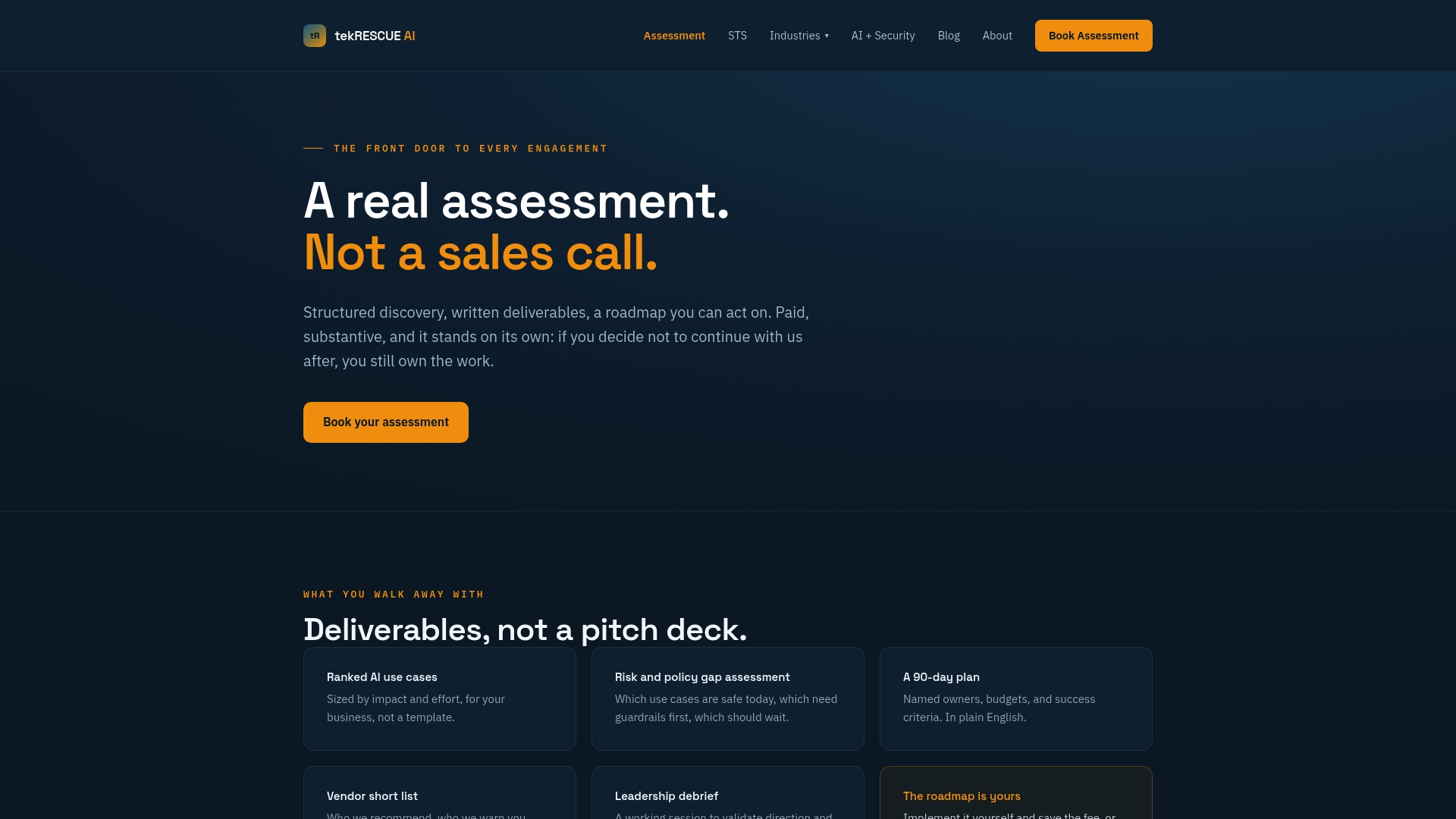
We map your highest-value use cases against real risk, build the policy and monitoring plan around them, and hand you an integration plan your team can run with. Book an assessment and get a roadmap built around how your business actually operates, not a template.
FAQ
What are the 5 ethics of AI?
Common frameworks group AI ethics around fairness, transparency, privacy, accountability, and safety or security. Exact lists vary by framework, but the NIST AI RMF organizes trustworthy AI around similar characteristics rather than a fixed count of five.
What are the 11 principles of AI ethics?
There isn’t one universally recognized numbered list of principles. Definitions vary across organizations and regulators, so the more reliable approach is to anchor your policy in a named framework, such as the NIST AI RMF, rather than an unofficial numbered list.
What are the three ethics of AI?
Some shorthand versions reduce AI ethics to fairness, accountability, and transparency, often referenced together as FAT. These three show up consistently across frameworks, though most comprehensive guidance, including NIST’s, also covers privacy and security as core concerns.
What are the ethical considerations in AI?
The main considerations are bias and fairness, data privacy, transparency and explainability, security and robustness, and the workforce impact of automation. Leaders also need to weigh regulatory exposure, since agencies like the FTC and EEOC have already taken enforcement action in these areas.
How does tekRESCUE AI help with AI ethics in business?
Our AI Profit and Growth Assessment maps your AI use cases against risk and builds a prioritized roadmap, while our Managed AI Security service keeps cybersecurity integrated into every deployment. The approach grounds governance in active IT and security practice rather than theoretical frameworks alone.